Source of Video Mercury
Mercury
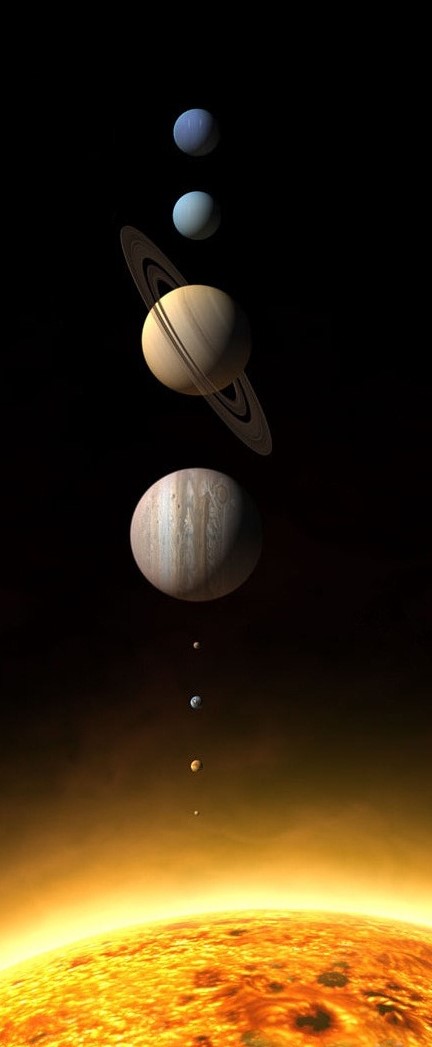
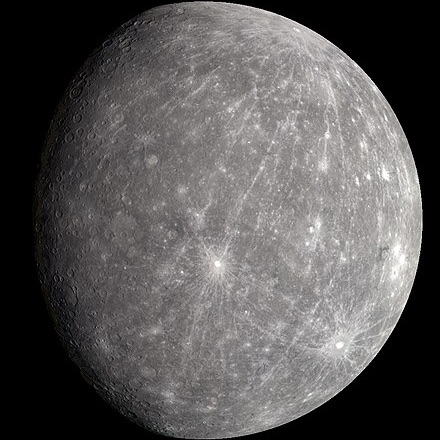
In the Solar System, there are four terrestrial planets. A terrestrial planet is a planet that is made out of silicone and oxygen rocks as well as metal. Mercury is a terrestrial planet because it is composed of 70% of metallic material and 30% of silicon and oxygen material. The radius of its equator is 2,439.7 kilometres and it is the smallest planet. Even though it is the smallest planet, it is also bigger than Ganymede and Titan, the two largest satellites in the Solar System.
Mercury is the closest planet to the sun. It takes 87.97 Earth days for Mercury to get around the Sun. Mercury can only be seen near the western horizon after sunset and at the eastern horizon before sunrise, usually in twilight. Mercury’s rotation ratio around the sun is 3:2. This means that it rotates on its axis exactly three times for every two turns it makes around the sun.
Venus
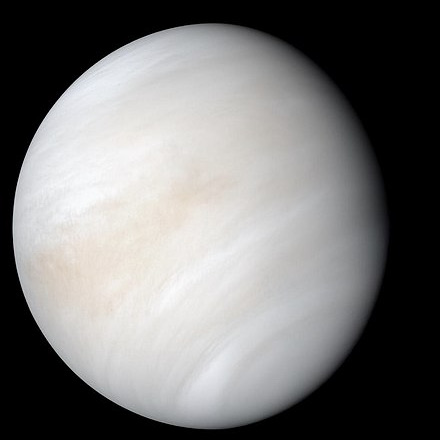
It is one of the four terrestrial planets like Mars and Earth which means that it is rocky. Its diameter is 12,103.6 km which is 638,4 km less than Earth’s. Venus’ mass is 81.5% of Earth’s. Venus is compared to Earth with respect to its size and mass because they are both very similar. It is often referred to Earth’s “sister” or “twin”. Venus’ surface is different than Earth’s because its dense atmosphere is 96.5% carbon dioxide and 3.5% nitrogen. It is the brightest object after the moon and can be seen on occasion in broad daylight.
Venus is the second closest planet to the sun. However, it takes longer to go around the Sun and goes in the opposite direction to all planets but Uranus. Venus goes around the Sun in 224.7 Earth days. It takes Venus 243 Earth days to completely rotate in relation to the stars.
Source of Video Venus
Source of Video Earth
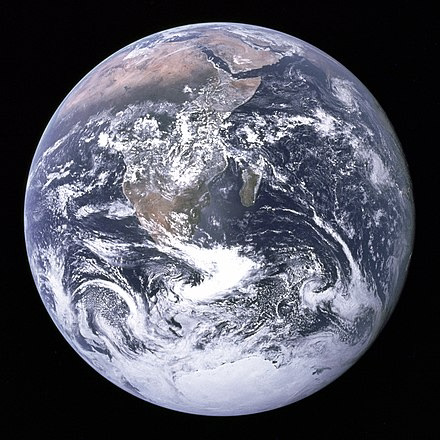
Earth
Earth is the third planet closest to the sun. It is almost a sphere. It is flatter at the poles and bulging around the equator because of its rotation. It is composed of 29.2% of land and 70% of water. Its atmosphere is out of nitrogen and oxygen. It is the most dense planet in our Solar System. It is also the largest and the out of the four terrestrial planets.
It takes Earth 365.25 days to go around the Sun. Earth’s axis of rotation is tilted to its orbital plane which is why we have seasons on Earth.
Mars
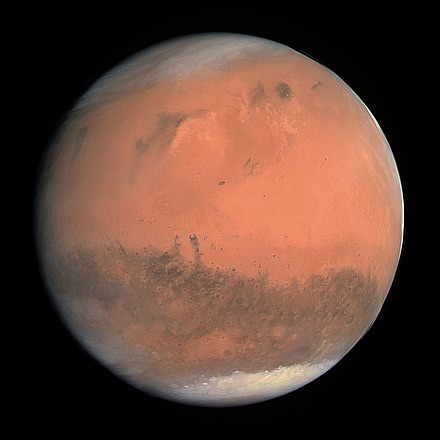
Mars is the fourth closest planet to the Sun. It is only larger than Mercury which means that it is the second smallest planet in our Solar System. Its diameter is half of Earth’s and its surface is slightly less than the total are of Earth’s land. Mars is red because of the iron oxide that is present on Mars’ surface. Mars is also a terrestrial planet.
It takes 687 Earth days for Mars to go around the Sun. Mars also has seasons like Earth because both the rotational period and the fact that the rotational axis is tilted to the orbital plane are similar to Earth’s.
Jupiter
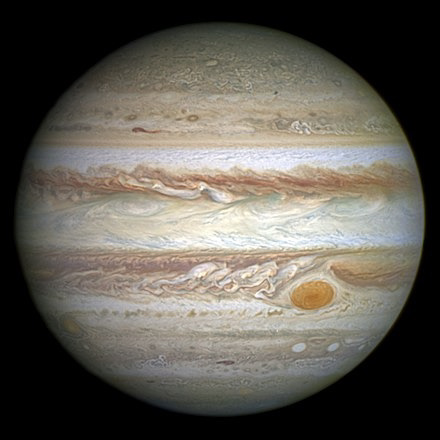
Jupiter is the fifth closest planet to the Sun. It is the largest one in our Solar System. It is a planet primarily composed of hydrogen, but a quarter of its mass is helium. Its mass is more than two and half times than all the other planets in our Solar System and is 318 times more than Earth’s mass. There is a noticeable red spot on Jupiter called the “Great Red Spot”. It is a storm with a high-pressure region. It is the largest storm in the Solar System. It is the third brightest object after the Moon and Venus.
It takes Jupiter 4330.6 Earth days to go around the Sun. Jupiter does not contain any seasons because its rotational axis is only 3.13 degrees. Jupiter can finish one rotation on its axis in a little less than ten hours making it the fastest planet in the Solar System, to rotate on its own axis.
Saturn
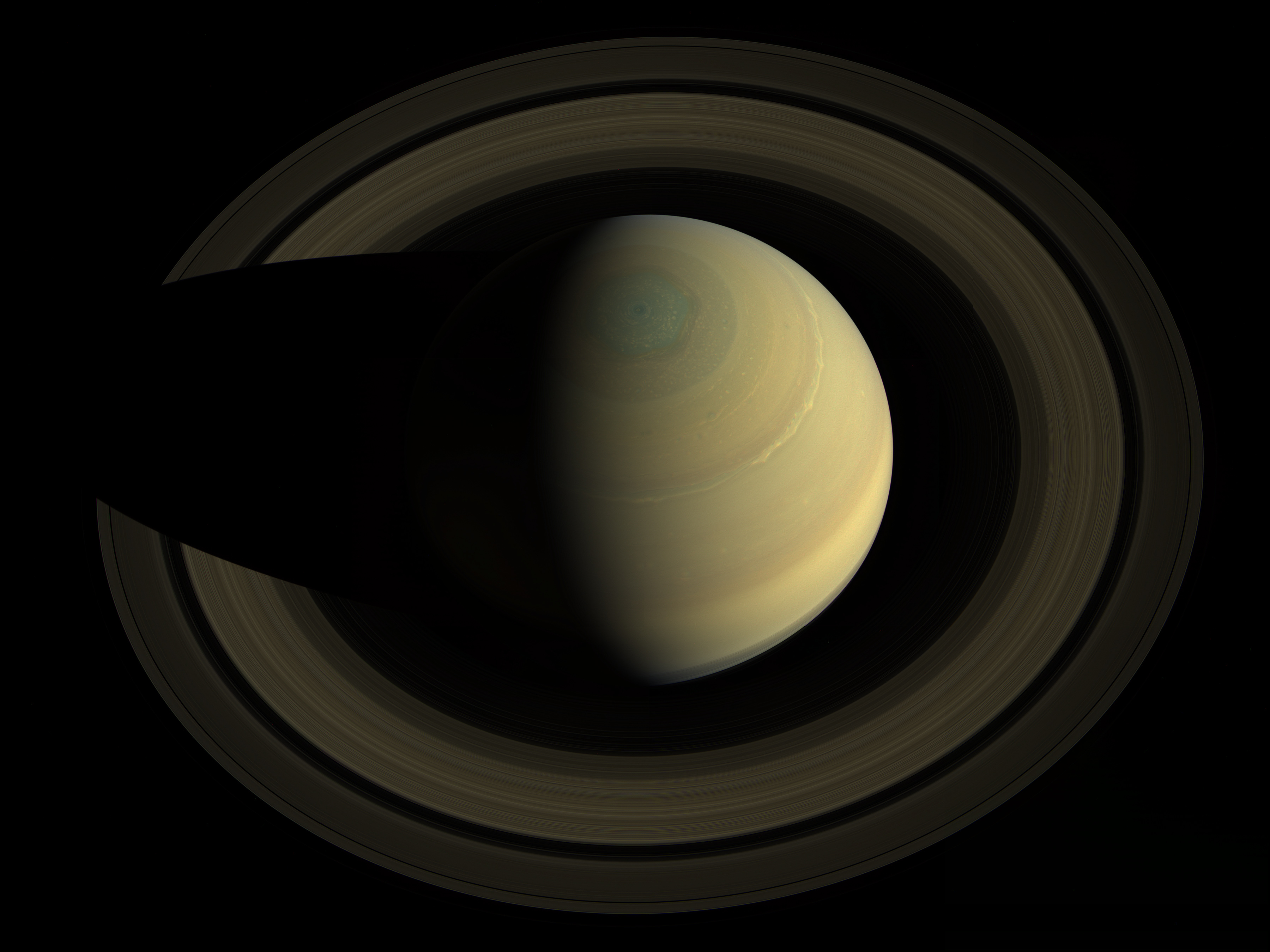
Saturn is the sixth closest planet from the Sun. It is also the second biggest planet after Jupiter. Its radius is nine and a half times more than Earth’s. It is the only planet that is less dense than water by 30% less. Saturn is nine-five times more massive than Earth. Saturn is made out of hydrogen and helium. The majority of Saturn’s ring is composed of ice particles and a little bit of rock debris and dust.
It takes 10759 Earth days to go around the Sun. Its rotation is flattened at the poles and bulges at the equator.
Uranus
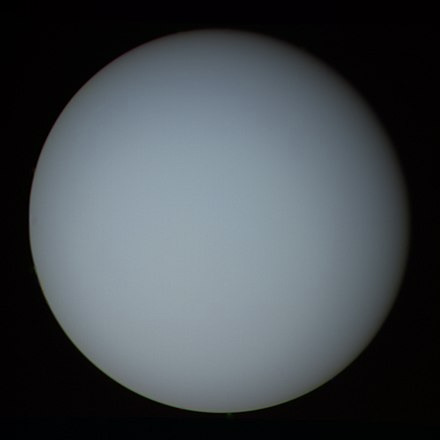
Uranus is the second furthest planet from the Sun. It has the third largest radius and the fourth largest mass in the Solar System. Uranus is commonly known as an “ice giant” because it is mostly composed of “ices” like water, ammonia, methane and small traces of hydrocarbons. It also contains hydrogen and helium. It is the coldest planet. Its minimum temperature is -371 degrees Fahrenheit. Its wind speed can go up to 900km/h.
It takes 84.3 Earth years to go around the Sun because it is so far from the Sun. Uranus’ axis of rotation is tilted sideways which results to its north and south poles being where most planets have their equators.
Neptune
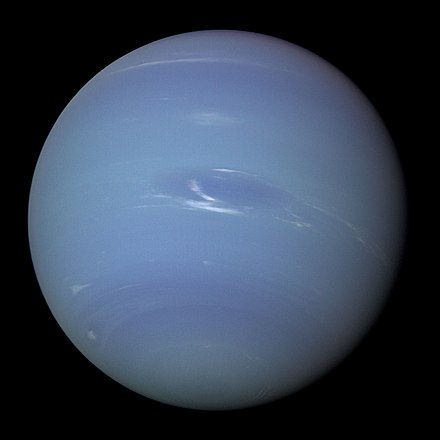
Neptune is the furthest planet from the Sun making it the last planet in our Solar System. Its diameter is the fourth largest and its radius is 24764km. It is the third most massive that weighs 17 times more than Earth’s which is 1.0243X10^26 kg. Neptune is also the densest planet. Neptune is smaller than Uranus because its atmosphere is more compressed because of its large mass. However, Uranus and Neptune are very similar with respect to their composition. Neptune is also an “ice giant” like Uranus because both planets are composed of the same materials. This is probably why they are both blue. Neptune also has a spot like Jupiter, except it is black for the same reason. It is created by a very strong storm. Neptune has the highest wind speed of 2100 km/h and the coldest temperature of -361 degrees Fahrenheit.
The average distance between Neptune and the Suh is 4.5 billion km. It takes 165 Earth years for Neptune to go around the Sun because it is the furthest planet from the Sun.